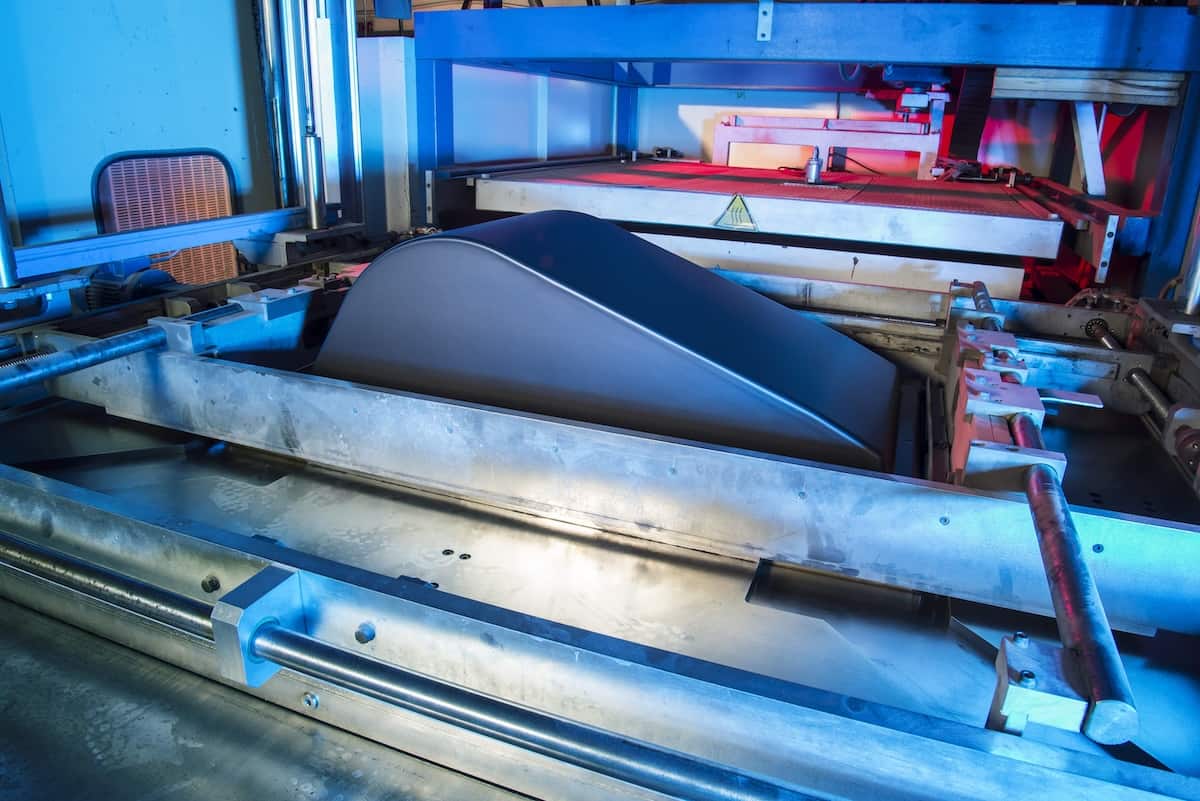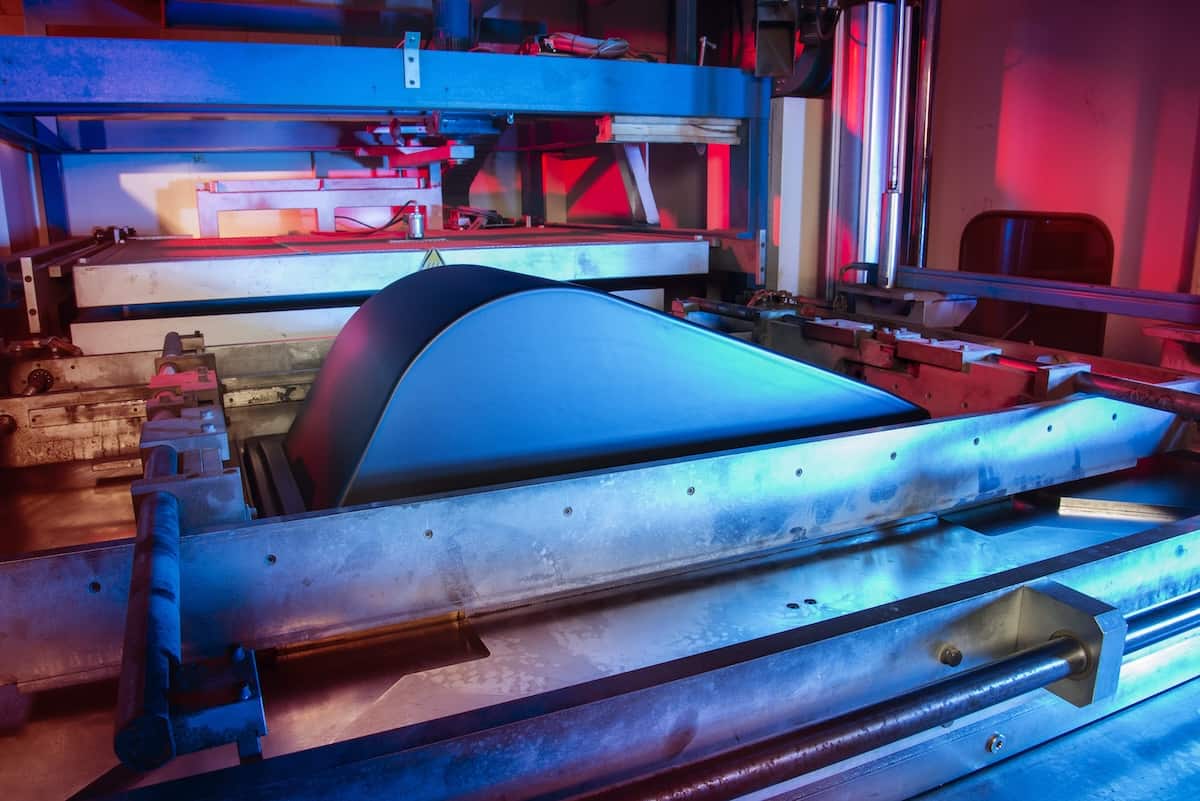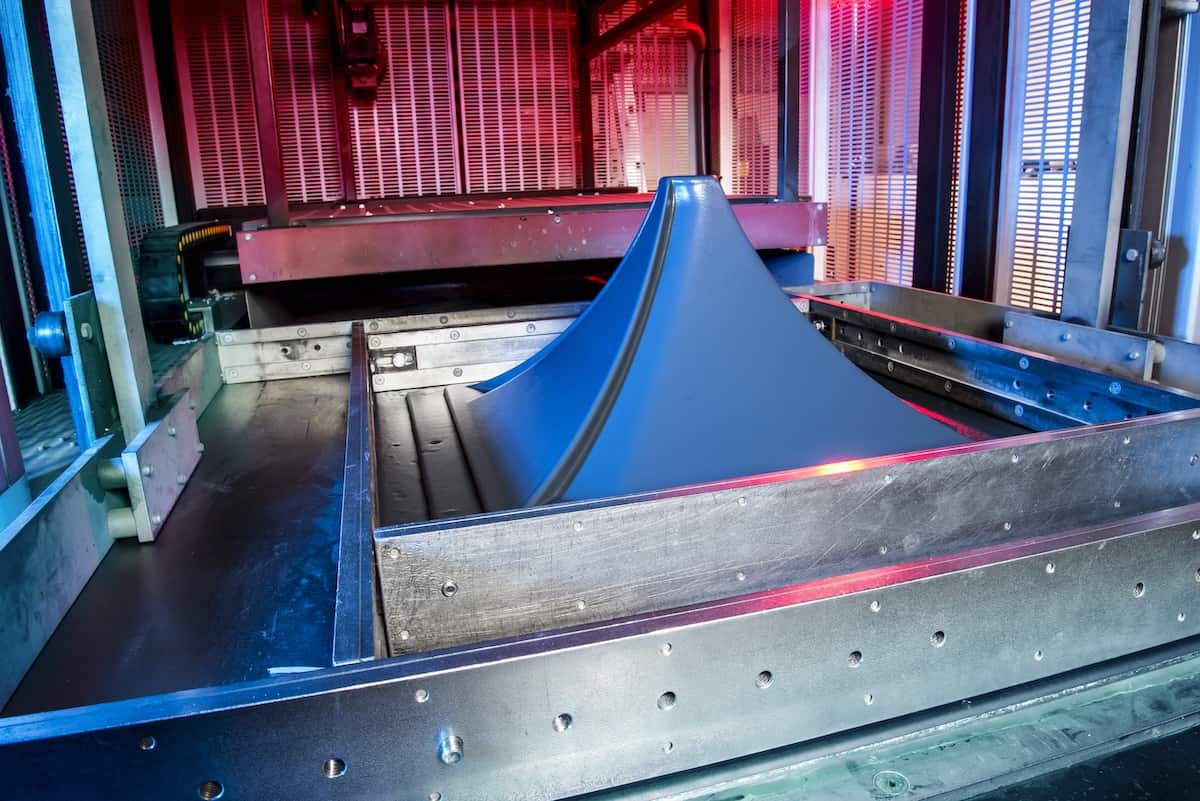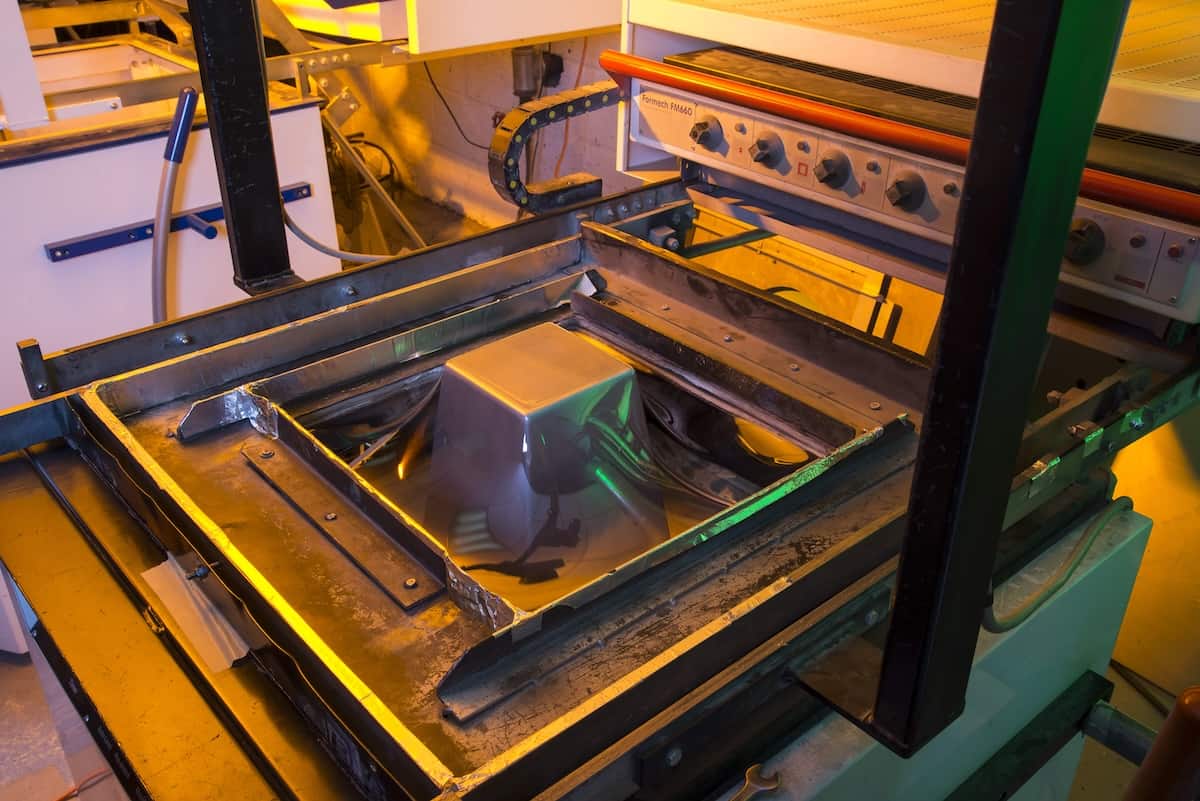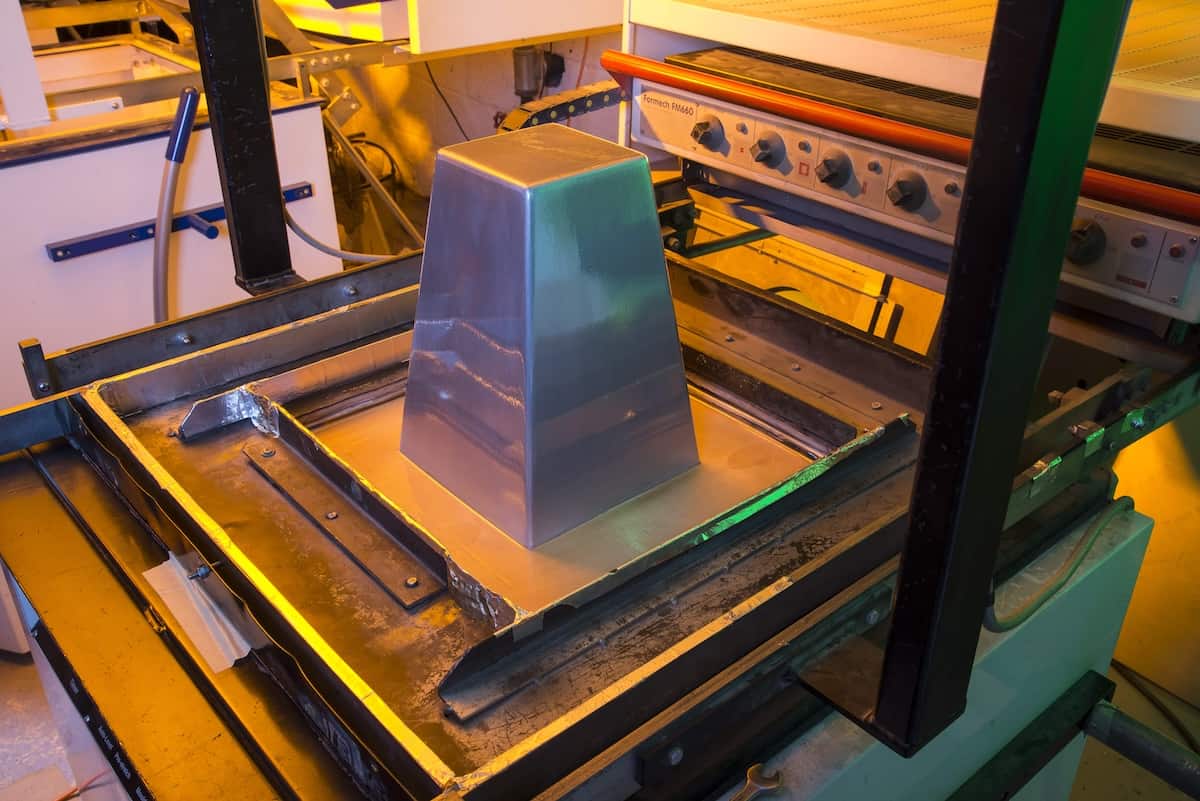
Plastic vacuum forming is a technique for transforming flat plastic sheet into a three dimensional shape using a mould tool.
The sheet is heated until it is malleable, then stretched over the mould tool while air is removed from the machine. Atmospheric pressure forces the plastic onto the tool, producing the plastic shape.
Excess plastic is trimmed away on our CNC machines, and the part moves on to its next stage of production, whether that is fabrication and assembly or dispatch to you as a finished plastic product.
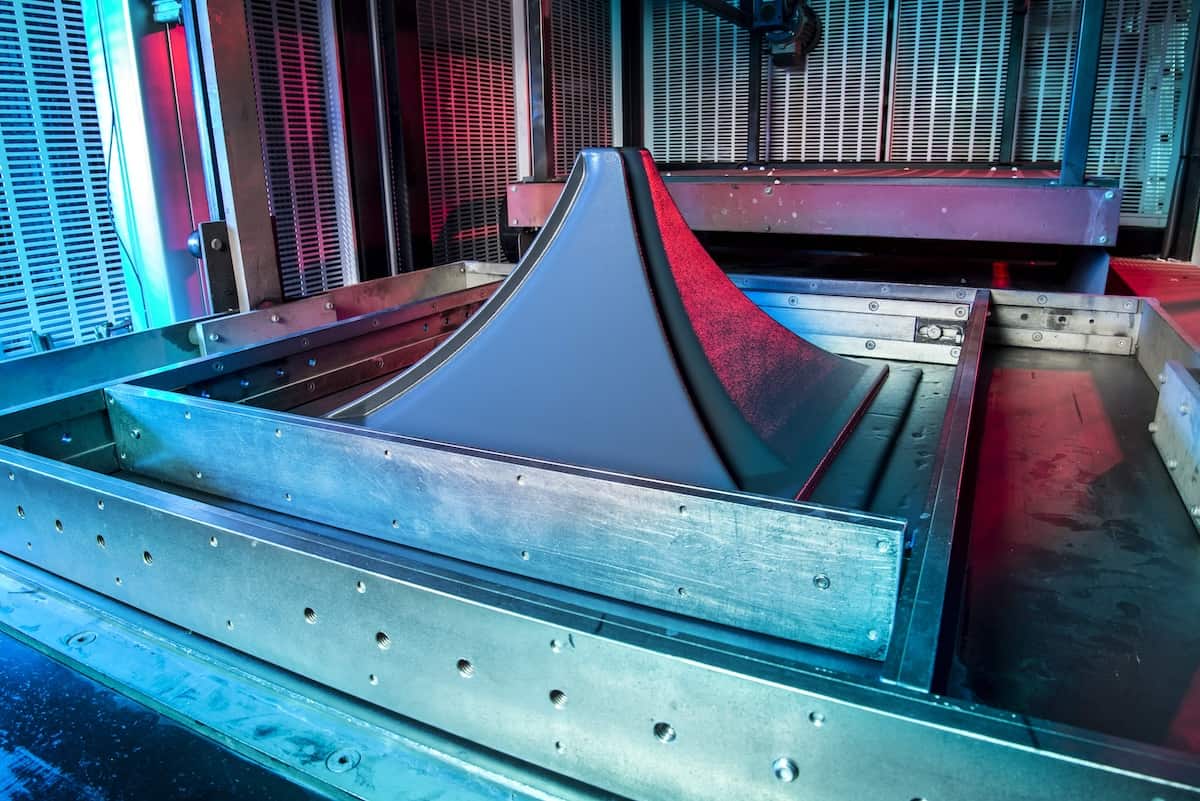
The benefits of thermoplastic vacuum forming
- Reduced tooling charges. Lower complexity and lower loads make it a cheaper option than injection moulding.
- Less machine time and material cost. Several moulds can share one machine bed to form multiple impressions in a single cycle.
- Wider material choice. Depending on time, budget and finish, tools can be made from epoxy or polyester resin, cast or milled aluminium, or wood.
- Ideal for small to medium runs. The automated process makes it easy to produce between about 100 and 100,000 units.
- Suits a wide range of products. From bespoke industrial design to standardised components for industries such as gardening.
Materials we form
- Perspex (acrylic)
- High Impact Polystyrene
- ABS
- Polycarbonate
- PVC
- Polyester (PETG)
- Polypropylene
- Polyethylene